
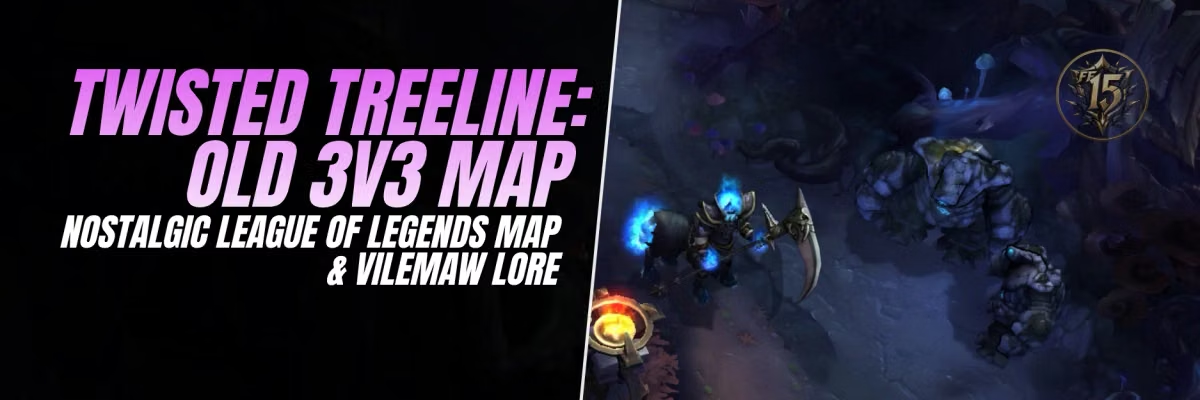
If you started playing League of Legends before 2019, there's a good chance you have some kind of memory tied to Twisted Treeline. Maybe you ground out placements there because queue times felt shorter. Maybe you remember getting yanked into a web by a giant spider and losing your whole team in three seconds flat. Either way, Twisted Treeline was a real, permanent part of League for a full decade before Riot quietly put it down. Here's the full rundown of what the map actually was, how it changed over the years, who Vilemaw is, and why it eventually disappeared for good.
What Was Twisted Treeline?
Twisted Treeline launched alongside League of Legends itself on October 27, 2009, making it the second official map in the game after Summoner's Rift. At first you could only play it in custom games. Normal queues (Blind Pick and Draft Pick) didn't get added until March 30, 2010.
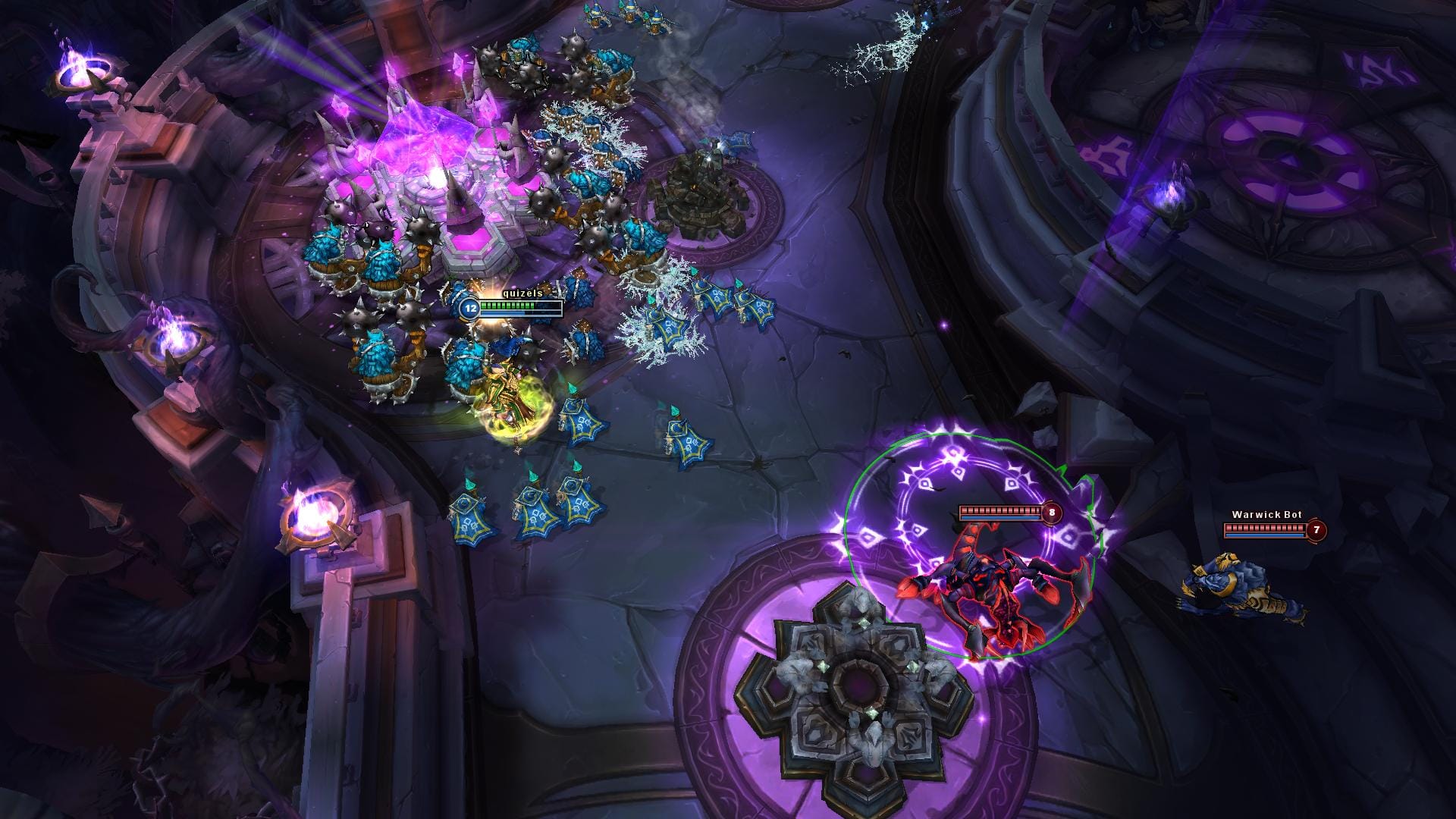
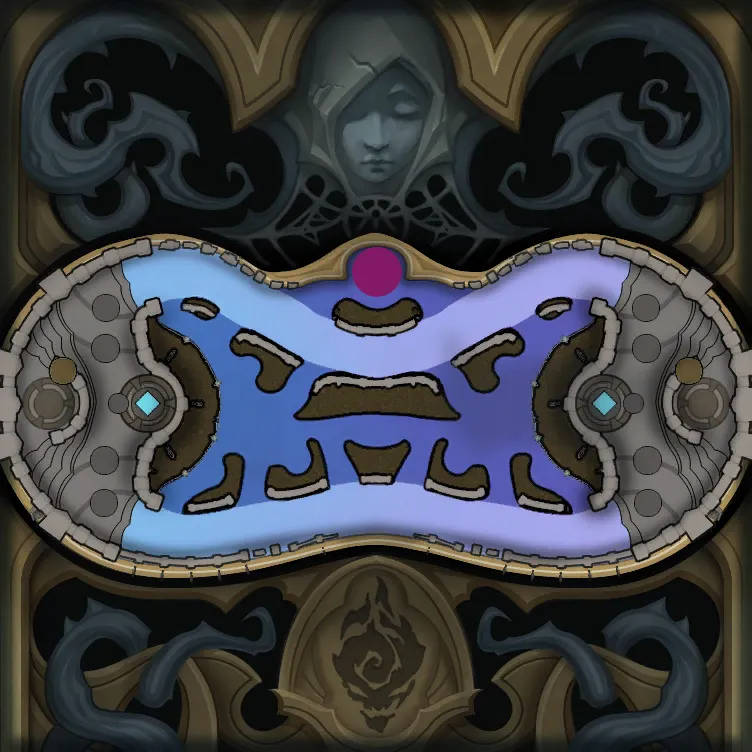
The format was 3v3 instead of 5v5. Two lanes ran along the top and bottom of the map with a jungle squeezed between them, and each team defended a single Nexus turret rather than the several turrets you'd find on Summoner's Rift. Matches were shorter, kills came faster, and champions started with a lot more gold than they did on the main map, since there wasn't much room for a slow build up with only three players per side.
Twisted Treeline later doubled as the battlefield for Hexakill, a special mode that crammed six players onto each team on a map built for half that many, first showing up around patch 4.18.
The Map Before the 2012 Rework
The version of Twisted Treeline most old school players remember isn't quite the same one that existed at launch. The original jungle was bigger and mostly randomized, so junglers could get lucky or unlucky depending on what camps they ran into that game.
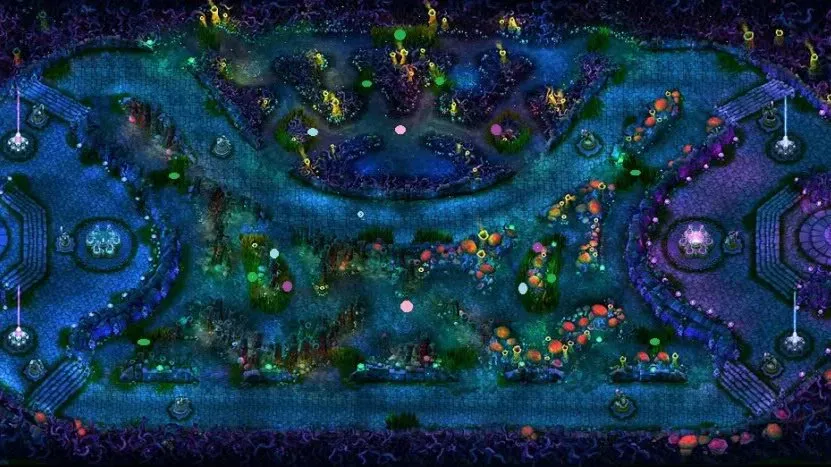
Instead of Vilemaw, the top of the map housed an epic monster called Ebonmaw, the Terror of Zaun. People just called it "the dragon," even though it had nothing to do with the elemental Dragon that would later show up on Summoner's Rift. Killing Ebonmaw handed your team a stacking damage buff called Crest of Crushing Wrath along with a solid pile of gold.
There was also Grez, the Lizard Lord, sitting alone in the center of the map with no other camps nearby. Grez granted a slow plus bonus true damage, basically the Twisted Treeline version of what most players know as Red Buff on Summoner's Rift, just noticeably tankier.
The 2012 Overhaul That Changed Everything
All of that got torn up in October 2012 with patch V1.0.0.150. Riot rebuilt Twisted Treeline almost from scratch, and this rework is what most people picture today when they hear the map's name.
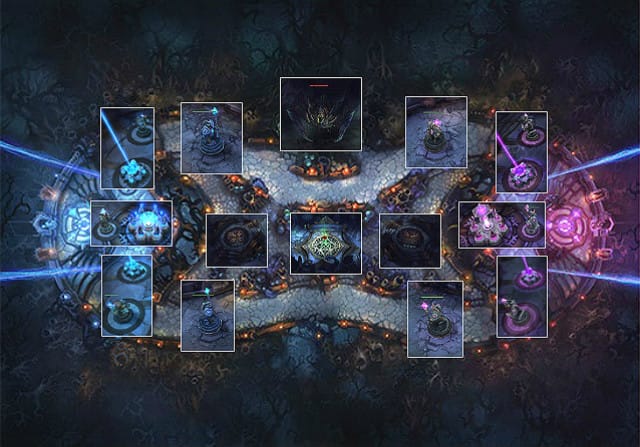
The randomized jungle got replaced by fixed, reliable camps mirrored on each side, and Riot shrank the upper jungle so junglers could threaten both lanes from a more central position instead of getting lost in a maze up top. Choke points outside each team's inhibitor got wider so games couldn't turn into permanent turtle fests, and a new wall went up separating the Nexus turret's beam from the rest of the base so players couldn't cheese wins by shoving super minions straight into it.
Ebonmaw and Grez were both retired in that same patch. In their place, Riot added Vilemaw, an entirely new epic monster, and swapped Grez for two capturable altars that granted a buff to the whole team while held, closer in spirit to the capture point objectives from Riot's other 3v3 style mode, Dominion. Ranked queues for Twisted Treeline arrived around this same period too. The item shop also never sold wards on the reworked map. If you wanted vision, you either played a champion with an innate warding tool, like Caitlyn, or you played without it.
Vilemaw, the Spider God of the Jungle
Vilemaw was, without argument, the single most important objective on Twisted Treeline. Riot described its role as basically the Baron Nashor of the 3v3 map, and the numbers backed that up. It first spawned around the ten minute mark and came back somewhere between five and six minutes after being killed, depending on the patch.
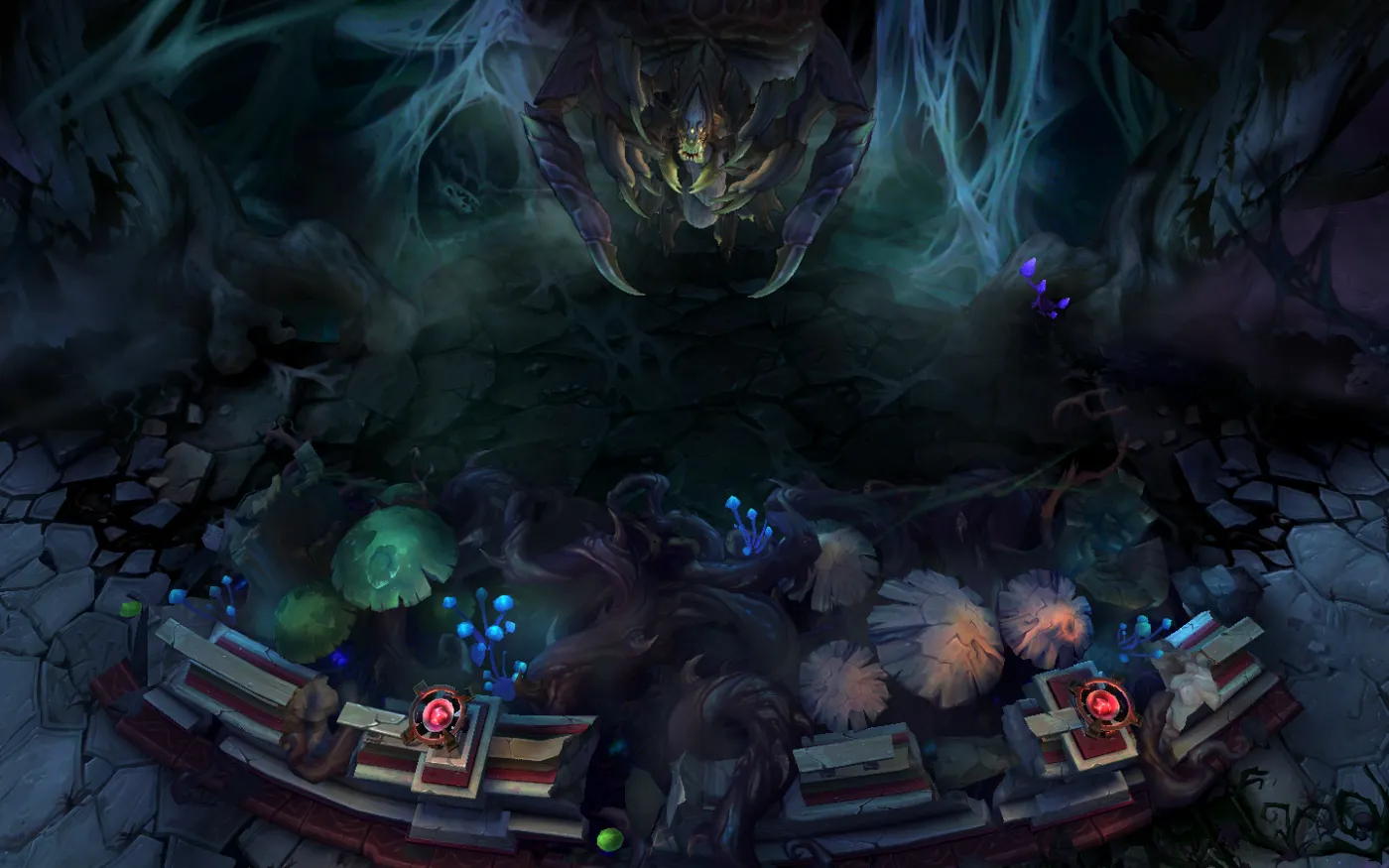
Its kit had real teeth. Vilemaw attacked whoever stood closest to it with either a melee or ranged hit, occasionally throwing out a slam attack that sent a shockwave down a line and caught everyone in its path. Every so often it would spin up a web around its pit that dragged nearby units toward the center, which is exactly as bad as it sounds if your whole team got caught in it at once. On top of that, every hit from Vilemaw stacked a debuff that chipped away at a target's armor and magic resist, capping out at sixty stacks for thirty points of resistance gone. It also completely ignored crowd control, though any damage attached to a crowd control ability still landed just fine.
Killing it rewarded your team with the Crest of Crushing Wrath buff, the same name as the old Ebonmaw reward. Early on, this buff gave your champions bonus health regen, mana regen, attack speed, and cooldown reduction directly. Riot later reworked it so the buff instead supercharged your minions, boosting their combat stats and movement speed and letting them briefly scare off enemy minions on contact, turning Vilemaw into a much bigger push and wave clear tool than a straight buff for team fights.
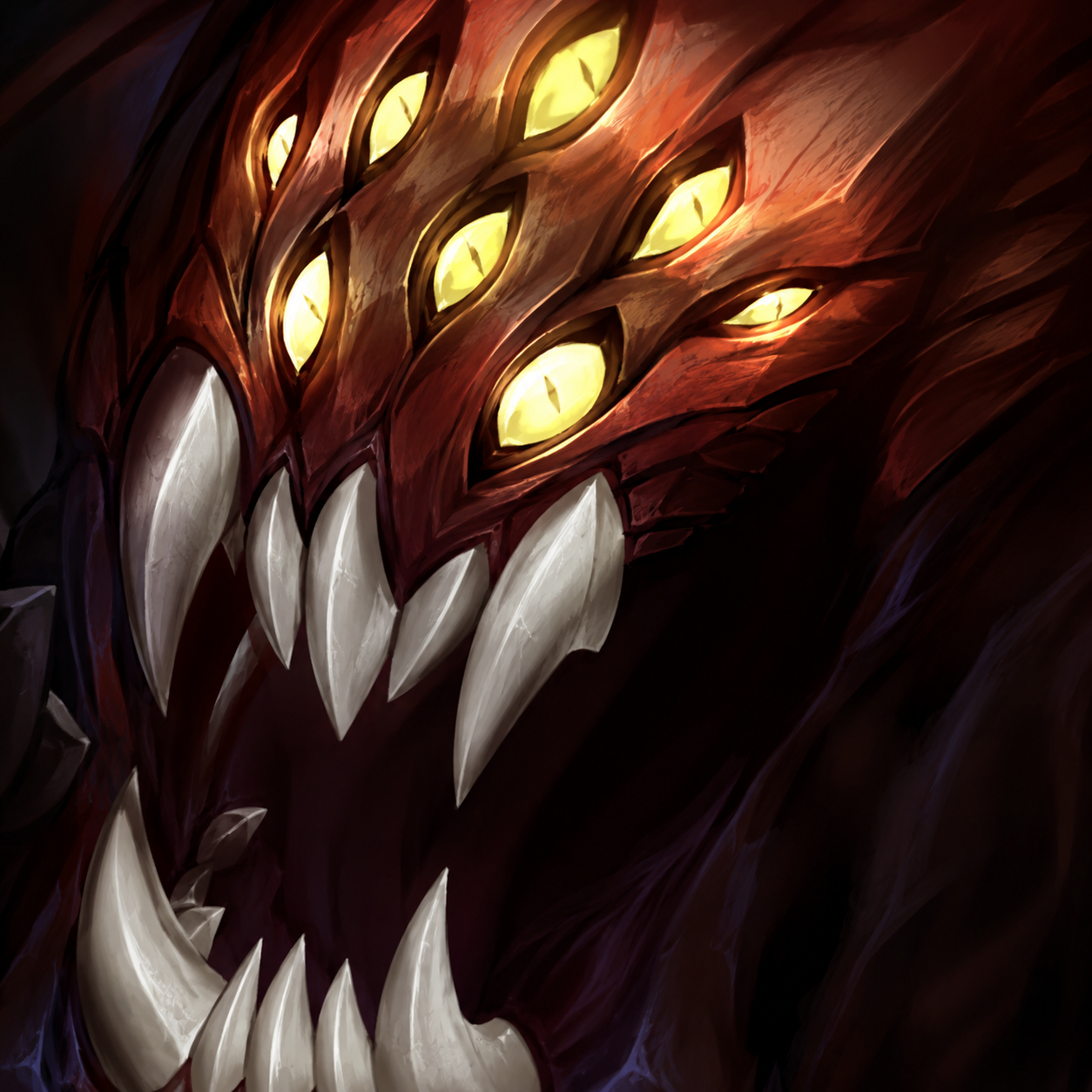
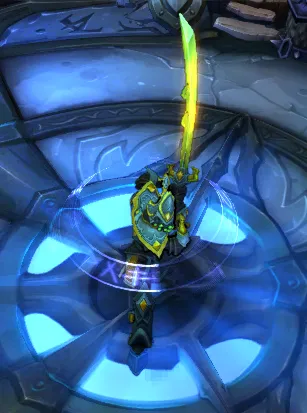
Crest of Crushing wrath buff & Buffed Master Yi.
And yes, there really is a dance easter egg. Get two or more champions to dance together in front of Vilemaw for about five seconds and it joins in.
Vilemaw dancing.
Interestingly, Ebonmaw never fully disappeared. Its skeleton sits visible behind Vilemaw inside the lair as a quiet nod to the old boss, though Riot developer Christina "Kitae" Norman confirmed on record that it's just a tribute and not meant to be canon.
The Lore Behind Vilemaw and Elise
Vilemaw isn't just a game piece. It's woven directly into one of League's better known champion backstories.
In Elise's origin, she's a Noxian noblewoman pulled into the Black Rose cabal by LeBlanc after poisoning her own husband. Her work for the Black Rose eventually sent her into the ruined city buried within the Shadow Isles, a place torn apart by old magic, chasing relics and power. Something ancient was already living down there. Vilemaw tore through her crew, devoured them, and sank its fangs into Elise's shoulder. The venom reshaped her on the spot, arachnid limbs pushing out through her spine, and when the pain finally passed she understood exactly what Vilemaw wanted from her without a single word being said. She sailed home alone, back in her human shape, the only survivor of the trip.
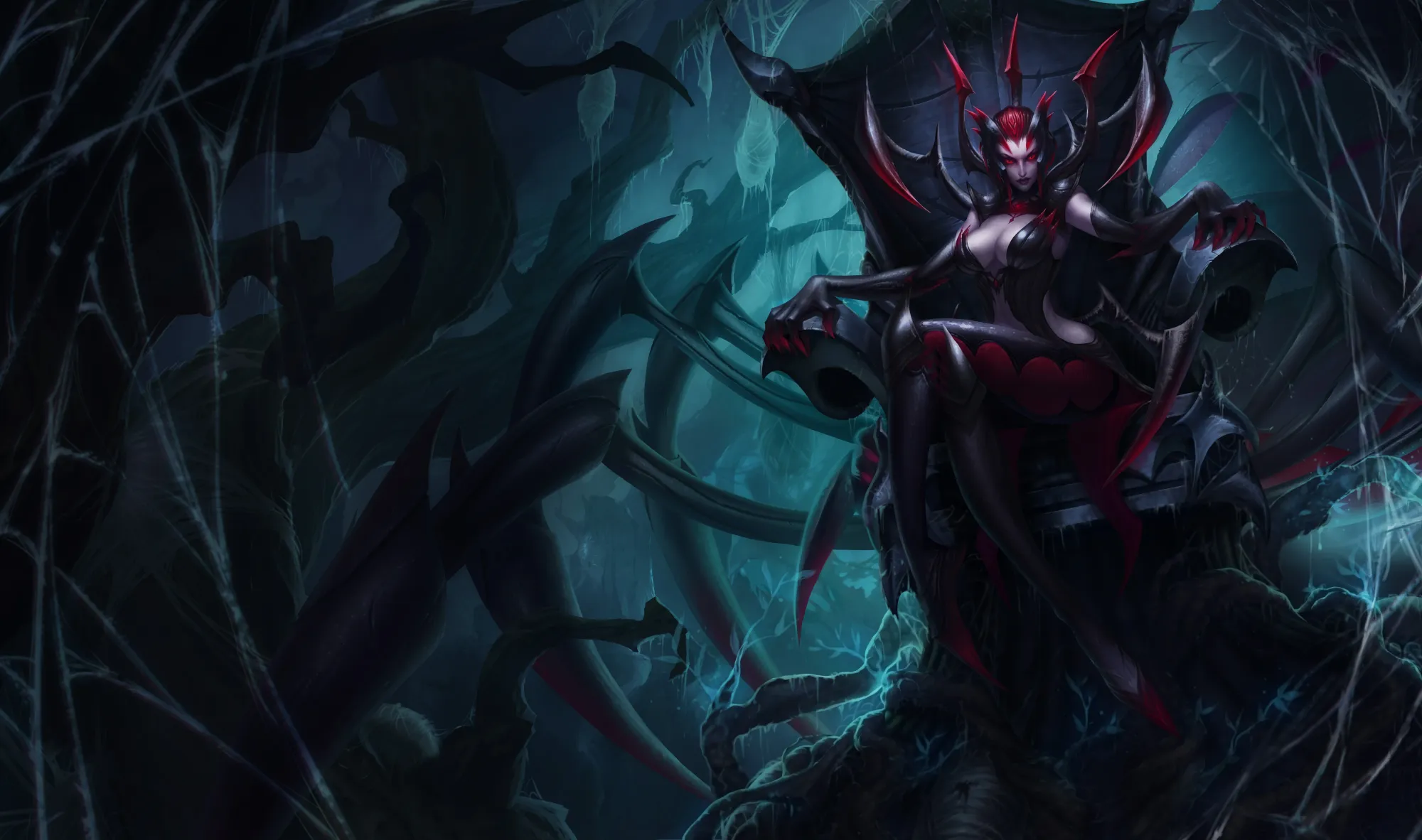
Since then, Elise keeps the arrangement going. She supplies Vilemaw with a steady stream of Noxian nobles and Black Rose acolytes as sacrifices, and in exchange it keeps her young through periodic doses of its venom, while also granting her safe passage back into the Shadow Isles for more of the artifacts the cabal wants.
Lore writers have also been pretty clear that the version of Vilemaw you fought on the map was nowhere near its actual scale. In the fiction it's described as something close to a true god, a being that could crush far more than three champions if it ever felt like actually trying, similar to how Baron Nashor is written as vastly stronger in the lore than his stats in the game ever suggested.
Why Riot Removed Twisted Treeline
Riot officially pulled Twisted Treeline out of League of Legends on November 19, 2019, alongside patch 9.23, right at the tail end of Season 2019 and just before Season 10 kicked off.
The core reason was simple. Player numbers had been shrinking for years, to the point where Riot said less than one percent of matches were being played on the map. What was left of that population skewed heavily toward bots leveling up smurf accounts rather than people who actually wanted a competitive 3v3. Riot looked into giving the map ARAM style ongoing support to try to save it, but concluded that even that level of investment wouldn't be enough to turn around a mode that had been neglected for so long. With Teamfight Tactics landing around the same period and other modes needing attention, Riot chose to retire Twisted Treeline rather than keep patching a mode almost nobody played.
Some of the map's assets didn't just vanish, though. Parts of it were reused during the development of Nexus Blitz, so if a corner of that map ever felt oddly familiar, that's likely why.
Is Twisted Treeline Coming Back?
As of now, no. Riot has been consistent that Twisted Treeline is retired for good, not on some kind of pause. That hasn't stopped a genuinely dedicated slice of the community from keeping the conversation alive, whether that's Reddit threads asking for its return, design pitches for what a modern Twisted Treeline could look like, or just people reminiscing about grinding placements there back in the day. Riot has repurposed a few of the map's ideas elsewhere over the years, but a full comeback for the original 3v3 experience doesn't appear to be on the table.
Quick Answers
When was Twisted Treeline removed from League of Legends? November 19, 2019, with patch 9.23, at the end of Season 2019.
What is Vilemaw? Vilemaw is the epic spider boss added to Twisted Treeline in the 2012 rework. In the lore, it's the ancient spider god that transformed Elise into her spider hybrid form in exchange for a steady supply of sacrifices.
What was on Twisted Treeline before Vilemaw? Ebonmaw, the Terror of Zaun, an epic monster nicknamed "the dragon," along with a separate camp called Grez, the Lizard Lord.
Can I still play Twisted Treeline? No. It was fully removed from the game client in 2019 and there's no official queue or mode that brings it back.
If you've got a favorite Twisted Treeline memory, whether it's a clutch Vilemaw steal or getting demolished by a bot account at level three, drop it in the comments. The map might be gone, but the stories are still worth telling.